
Twelve days of Norfolk’s past
From ancient gold rings to medieval gateways, follow a familiar Christmas carol through Norfolk’s rich history
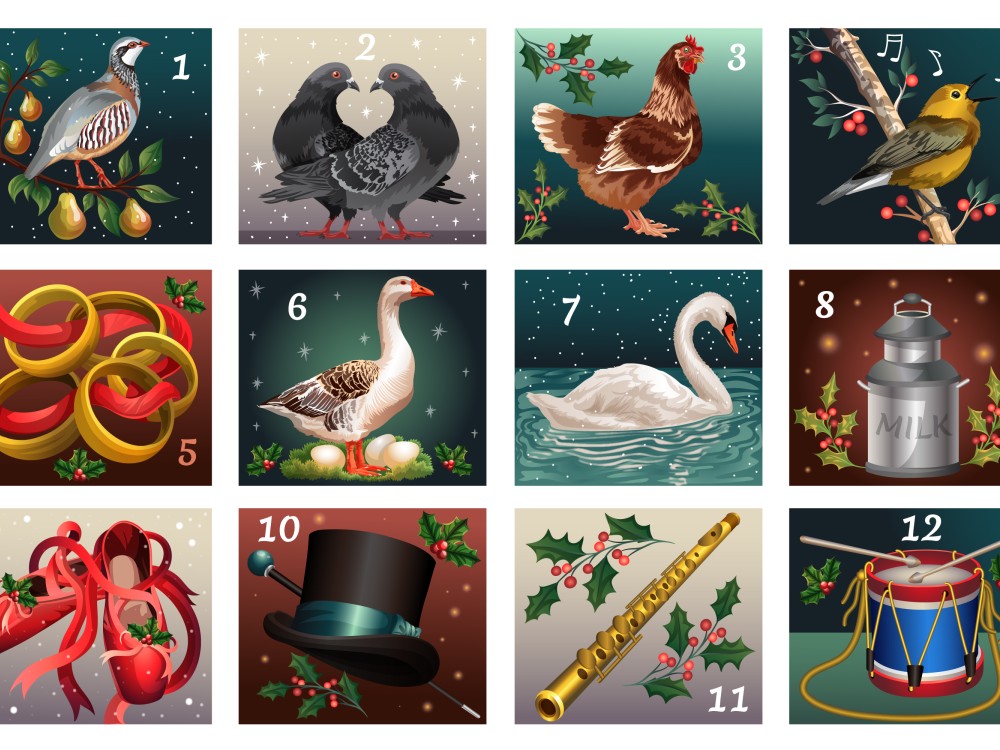
A partridge in a pear tree, five gold rings and twelve drummers drumming might seem unlikely companions for exploring the county’s past, yet echoes of the much-loved carol can be found in medieval architecture, ancient jewellery and curious carvings.
Inspired by a festive presentation at Gressenhall Farm and Workhouse in 2006, staff at Norfolk County Council’s Historic Environment Record have created a seasonal journey following the song through centuries of local history. From Bronze Age gold to medieval pilgrim badges, each verse reveals something about the people, places and traditions that have shaped Norfolk through the ages.

Twelve drummers drumming…
At Castle Acre, the twin drum towers of the Bailey Gate have watched over the village entrance since around 1200. They remain steadfast guardians of a medieval approach, with the road still passing between them and carrying today’s travellers through a gateway used for generations.
Eleven pipers piping…
Fragments of clay tobacco pipes are familiar finds across Norfolk, offering archaeologists glimpses of an everyday habit once enjoyed throughout the county. As tobacco became more affordable, pipe bowls grew larger, making their changing shapes useful clues when dating discoveries.
Ten lords a-leaping…
Norfolk’s celebrated naval hero is honoured in Great Yarmouth by the imposing Nelson Monument, erected in 1817. High above the ground, a figure of Britannia crowns its column, facing towards his birthplace at Burnham Thorpe.
Nine ladies dancing…
Medieval pilgrims visiting the shrine at Walsingham could collect badges depicting Our Lady of Walsingham, taking home a modest reminder of their journey. These small souvenirs offer a tangible link to the devotion that drew travellers to Norfolk centuries ago.

Eight maids a-milking…
On Norwich’s historic Tombland, the Maids Head Hotel traces its origins to at least the 15th century, although much of what stands today belongs to the 17th century and incorporates earlier properties. Its long history carries a touch of mystery, with legend speaking of a lady in grey.
Seven swans a-swimming…
At the Great Hospital in Norwich, a swannery recalls the medieval practice of breeding and keeping swans. Its surviving water-filled swan pit dates from the late 18th century, providing a place where captive birds could swim and exercise.
Six geese a-laying…
An unusual 19th-century headstone in the churchyard at Ashby St Mary depicts a woman feeding her geese. This affectionate scene preserves a glimpse of daily life, remembering the person behind the inscription through the birds she tended.
Five gold rings…
The carol’s golden gifts find a Norfolk counterpart in a remarkable Bronze Age discovery made at Gresham in 2004: nine gold rings threaded onto a larger tenth ring. Unearthed during the digging of a soakaway, the find brought an unexpected encounter with the distant past to an ordinary piece of groundwork.

Four calling birds…
An 11th-century bird brooch discovered at Stoke Holy Cross introduces a Scandinavian influence to our festive collection. Its decoration belongs to the Ringerike style, offering a glimpse of the artistic traditions that reached Norfolk during the Late Saxon period.
Three French hens…
Birds also appeared in Roman jewellery, with cockerel-shaped brooches among the many animal designs used to decorate clothing. Their wings could be picked out in red and blue enamel, and similar brooches have been found in Norfolk.
Two turtle doves…
At Threxton, a circular post-medieval dovecote built from clay lump on a flint base shows how pigeons were housed. Nesting holes line its interior walls, while remnants of a conical slate roof hint at its original appearance.
…and a partridge in a pear tree!
Our final verse finds its echo in a worn medieval horse harness pendant from Cawston, depicting a hound running past a tree with a partridge-like bird perched among its branches. Though its details have softened with time, this tiny scene brings our festive journey to a fitting close, showing how even the smallest discoveries can carry Norfolk’s history through the centuries.
There is comfort in the familiar rituals of Christmas: songs remembered from childhood, decorations brought down from the attic and stories shared around the table. Norfolk’s past has its own place among these traditions, connecting us with the people who shaped the county long before our time. Their world may have changed beyond recognition, yet the traces they left behind remain part of the place we call home.
Visit the Norfolk Heritage Explorer website to learn more about these historic sites.