
The artist who captured the lives of locals
During the 1900s, Britain experienced rapid technological advancements. As the nation progressed in radar, radio, cars and cameras, one woman ensured King’s Lynn kept pace with the times
In mid-September 1925, King’s Lynn was abuzz with anticipation. Posters appeared across town announcing the upcoming Trades, Art and Electrical Exhibition, with local newspapers hailing it the ‘event of the year.’ Following a successful debut in 1924, articles detailed the exciting displays the public could expect to admire, promising a showcase of innovation and creativity.
While it may not have rivalled the grandeur of international World’s Fairs, the exhibition aimed to demonstrate the potential that could be achieved with an ‘efficient electrical service’ in King’s Lynn’s commercial districts.
While it might seem mundane today, it’s important to keep in mind that
only 6% of UK households had electricity in 1919, and it wasn’t until the 1920s that the National Grid began distributing electricity throughout
the country.
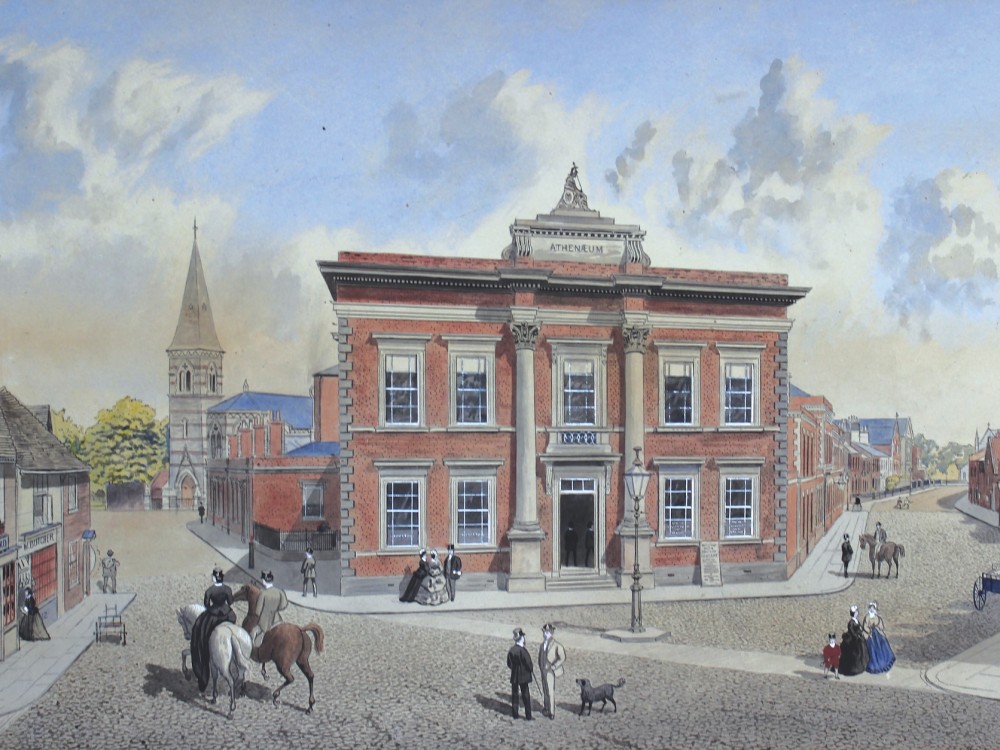
Artists such as Walter Dexter would showcase their work, the Hall of Fashions was to display ‘coming fashions for ladies’ wear,’ and in the Central Hall of the Athenaeum (now known as the old post office building) visitors could marvel at the innovative concept of home-made movies.
Ready to entertain and astound the public with the new Ciné-Kodak camera and Pathé Baby projector was Miss Amy Elizabeth Purdy, a woman who had beaten the odds to succeed as a local photographer.
Born in York in 1871, Amy was the daughter of a pharmaceutical chemist and grew up as an only child. Demonstrating intelligence early on, she followed in her father’s footsteps and started studying pharmacy at the age of 20. She was a quick learner and went on to train as a teacher of botany, chemistry, ancient and modern languages, music and art. While she could have excelled in any of these fields, Amy developed a passion for photography and decided to pursue it as a career.
By 1901, Amy had moved to King’s Lynn and wasted no time in establishing herself as a ‘photographic artist.’ This was no simple task, as over 20 photographers and studios advertised their services in Lynn, many of whom were more prominent and locally recognised. Competition was tough, although Amy held one advantage over her male rivals.
Women had been involved in the development of photography since its inception in the mid-1800s. Joseph Nicéphore Niépce, credited as the inventor of the practice, wrote letters to his sister-in-law seeking advice on his creations. In Britain, Constance Talbot is credited as the first woman to take a photograph, aiding her husband Henry Fox Talbot and his peers as they pioneered new photographic methods.

Photography soon gained popularity among aristocratic women, particularly after Queen Victoria expressed her interest, and articles on how they could join the profession soon began to appear. In 1897, the Ladies’ Home Journal stated, ‘Women might find this line of work pleasant and lucrative, where employment in the more restricted fields of typewriting,
clerking, bookkeeping etc., would prove wearing and uncongenial to them.’
By 1900, women constituted almost 20% of professional photographers, a noteworthy amount considering that working outside the home was frowned upon for women at the time. Many photography studios sought out ‘lady operators’ to photograph people due to the likelihood of physical contact between the photographer and their subjects. It was thought more women and families would visit studios if a female employee was taking their photo.
This was a significant advantage for Amy Purdy, and by 1907 she had earned enough to set up her own photography studio at 84 Lynn High Street, where she continued to practice for over 25 years. Her reputation soared, and according to one of her advertisements, she excelled at every branch of outdoor photography, studio portraiture and at-home portraiture. Before the press employed their own in-house photographers, Amy’s name frequently appeared under early photographs taken for local newspapers. She became so well-known that the yard behind her photography studio was known as Purdy’s Court for many years.
As technology progressed and Amy’s renown grew, she took her place in the grand Athenaeum building for the 1925 Trades, Art and Electrical Exhibition. Cameras were not cheap in the early 1900s, so it’s a testament to her success that Amy could afford to bring the newly released Ciné-Kodak camera and Pathé Baby projector to the exhibition, costing around £1,172 and £987 respectively in today’s money.
By all accounts, the exhibition was a success, and King’s Lynn was on its way to entering the modern age. Amy retired in 1929, and her apprentice, Percival Goodchild, took charge of the studio. Several of her photographs and personal effects are preserved today at Lynn Museum, the remaining traces of a woman determined to make a name for herself in restrictive times.
Amy Purdy played a key role in establishing a respected photographic business during a time when professional photography was still a developing field. Photos of Mandy Ewen (above, left) and a model only known by the name of Flo (above, right) are some of the few surviving images captured by Purdy.
