
The return of the beaver
In a wild corner of Pensthorpe Natural Park, a long‑absent species has quietly reclaimed its place
When volunteers at Pensthorpe Natural Park discovered a felled tree bearing unusual marks in a remote corner of the reserve, they had no idea they were witnessing the beginning of something remarkable. Only after setting up cameras and monitoring the area closely did they confirm what had seemed almost impossible: a wild beaver had returned to Norfolk.
“The evidence was unmistakable. Gnawed timber, stripped bark, all the classic signs of beaver activity,” says Pensthorpe Reserve Manager Richard Spowage. “We put camera traps out to see whether we could catch a glimpse, and it took about a week to get some footage. That’s when we knew for certain we had a resident beaver.” The cameras remained in place ever since, capturing intimate glimpses of the beaver’s daily life. “We watched it encounter an otter, which was amazing,” Richard adds. “It slapped its tail as if to say, ‘This is my patch, you go somewhere else.’ It was a very positive sign that it felt happy in its new home.”
What no one realised at the time, however, was that the beaver was not alone. Continued monitoring has now revealed something far more significant: new footage has confirmed two individual beavers together, displaying grooming behaviour and occupying a substantial lodge deep within Pensthorpe’s restored wetlands. What began as the return of a single dispersing animal has become an even more extraordinary discovery - the first settled wild beaver pair in Norfolk for 500 years.

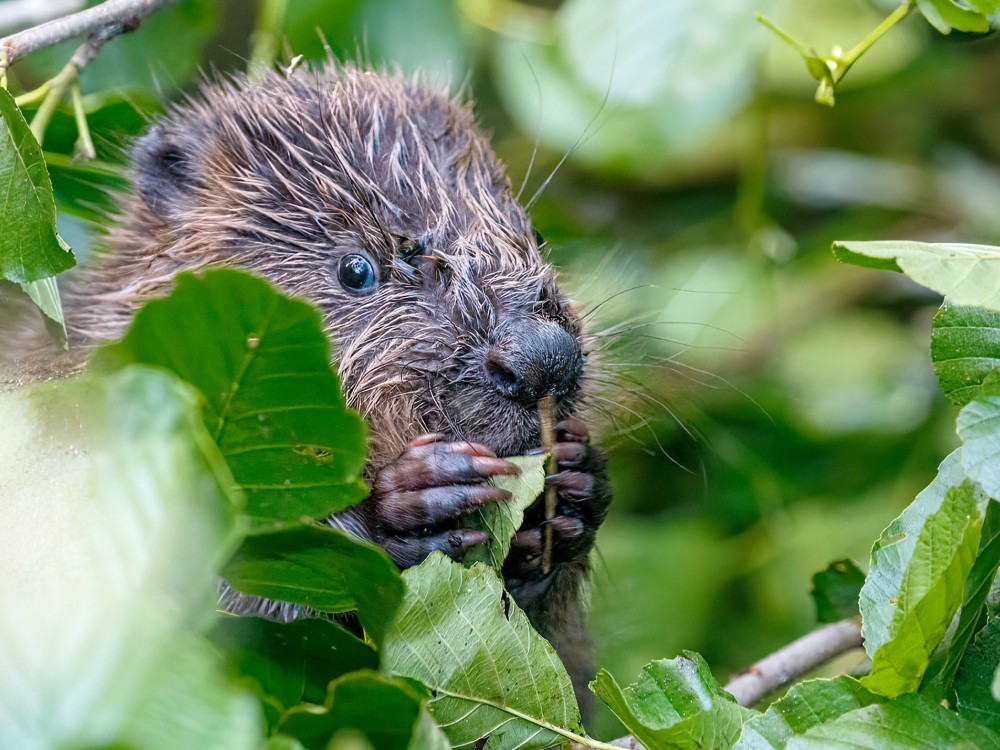
Beavers are large, semi-aquatic rodents known for their ability to reshape landscapes. They have dense fur for warmth, webbed hind feet suited to swimming, dexterous front paws for carrying materials, and strong iron‑rich teeth capable of felling trees. Contrary to popular belief, they don’t eat fish; these industrious vegetarians feed on aquatic plants, bark and the soft inner wood of trees.
Until now, every beaver in the county has lived within an enclosure, which makes the origins of Pensthorpe’s newcomers even more intriguing. Nearby facilities have confirmed that none of their animals are missing, but wherever they came from, this pair has clearly claimed Pensthorpe as home.
Meanwhile, at nearby Sculthorpe Moor Nature Reserve, another chapter in the county’s beaver story is unfolding. The Hawk and Owl Trust have been running a reintroduction project there for four years within a 52-acre enclosure. What began with a single pair has now grown into a family of seven, offering valuable insight into how these animals could transform Norfolk’s future landscapes.
“Beavers are a keystone species and vital ecosystem engineers,” explains Liberty Wells, Outreach and Conservation Ranger at the Hawk and Owl Trust. “They have a
huge impact on their surrounding habitats, shaping wetlands and creating diverse environments for other species to thrive.”
By blocking ditches and forming floodplains, beavers slow water during heavy rainfall, reducing flood risk downstream. Their dams act as natural filters, removing nitrates, phosphates and sediment, while their tree felling opens up woodland canopies and allows more light to reach the ground.
The results at Sculthorpe are already visible. “We’ve seen an increase in dragonflies and damselflies, and there have been lots of froglets this year,” says Liberty. “A pair of kingfishers even made a burrow in a fallen tree. With the ditches full and new wetland areas forming, there’s more hunting ground for them, so the beavers have created both habitat and a food source.”
Back at Pensthorpe, the wild pair is displaying classic behaviour, storing food, felling trees and maintaining their lodge — a sturdy dome of sticks and mud that shows they are firmly settling in. Detailed monitoring has shown no alteration to water levels, no impact on neighbouring land, no infrastructure concerns and no implications for visitor safety. The animals are behaving entirely naturally within a suitable river habitat.
What drew these beavers to Pensthorpe highlights an important conservation lesson about the power of non-intervention. “We’ve not taken out fallen trees, and we’ve not cleared the river edges,” Richard explains. “Rather than what we’ve actively done, it’s what we’ve chosen not to do that has created this amazing habitat.”
For now, the beavers’ exact location remains confidential to protect them from disturbance. “This isn’t a visitor attraction, and we’re grateful to the public for respecting that,” says Richard. “We have to accept that these nocturnal creatures are almost impossible to see in the wild, but we’ll continue sharing the footage we capture.”
Those eager to observe beavers can visit Sculthorpe Moor, where guided tours and evening walks offer the chance to see the resident family and learn more about their ecological role. “We’ve been surprised by how often we see them and how tolerant they are of us,” says Liberty. “We’ve had some wonderful sightings of both adults and kits.”
Norfolk’s waterways may yet reveal more surprises. Richard and Liberty encourage anyone who spots potential signs of beaver activity to photograph the evidence and contact organisations such as the Norfolk Rivers Trust, the Beaver Trust or Natural England.
“These are remarkable creatures,” Richard says. “It’s amazing that animals, whatever their origins, have responded to being free by doing exactly what their species should do. A thriving pair of wild beavers will undoubtedly bring real benefits to our rivers and ecosystems here in Norfolk.”

A beaver kit at Sculthorpe (above). Fully grown, these semi‑aquatic mammals can exceed a metre in length and weigh up to 30kg, powered by webbed hind feet and iron‑infused teeth. Known for their engineering skills, beavers build dome‑shaped lodges from sticks and mud to provide secure shelter throughout the seasons (below).
