
Listening out for the call of the wild
The short days and icy temperatures may make us reluctant to leave the house, yet winter is one of the finest seasons to admire Norfolk’s feathered visitors
When picture-perfect frosty mornings fail to appear, it may seem like there is little temptation to step outside. Many of us wait for spring, when fresh shoots rise from the soil and young wildlife fills our fields and forests with wonder, but this season brings its own rewards to those willing to wrap up warm and embrace the crisp winter air.
Hedgerows flutter with wings, woodlands echo with nocturnal calls and our atmospheric beaches welcome flying travellers from overseas. It’s as good a time as any to tick bird species off our lists, and a perfect season to savour Norfolk’s most striking landscapes.
Every birder’s calendar marks the thrilling months when migrating flocks arrive. That fleeting chance to glimpse elusive species is an irresistible challenge, drawing eager watchers to the coast each year.
Norfolk is renowned as the winter home of the pink-footed goose. Each October, tens of thousands journey from Iceland and Greenland to take advantage of our gentler climate, remaining until April. Around 40,000 settle on the Wash, often drifting inland to graze on the remnants of harvested sugar beet and barley in nearby fields. RSPB Snettisham and Holkham Nature Reserve are among the best places to witness the geese in flight, their iconic V-shaped skeins sweeping across the sky as a chorus of high-pitched honks echoes overhead - leaving no doubt you’ve found the right spot.

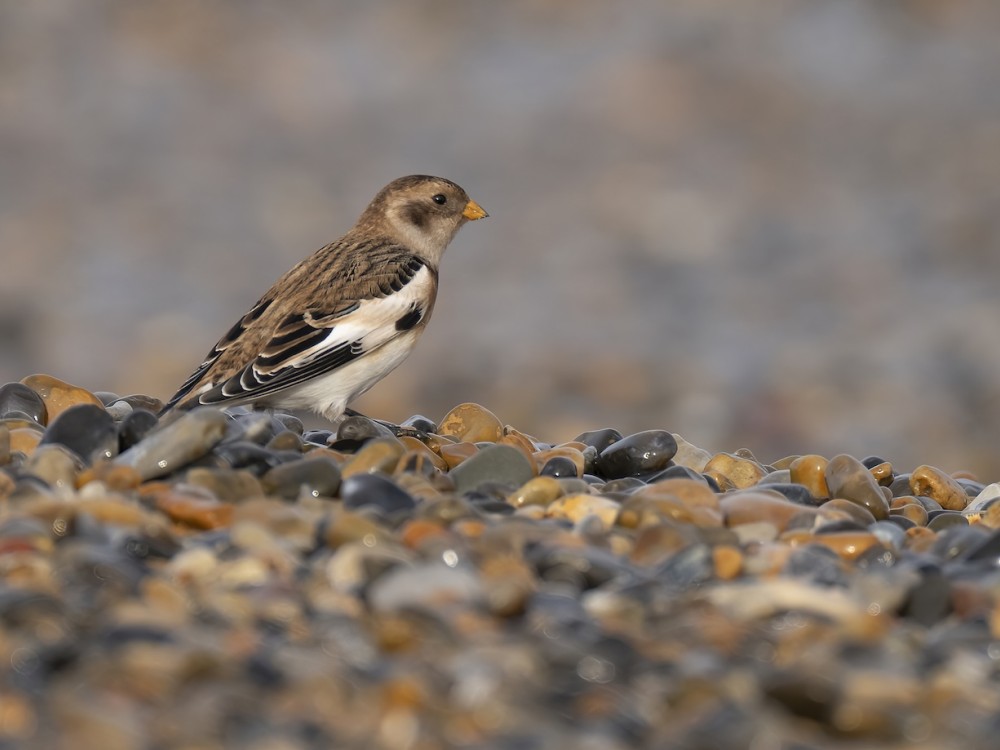
After admiring the spectacle overhead, turn your binoculars to the dunes for a glimpse of a rarer Arctic arrival. Snow buntings, the most northerly of the passerine birds, are a true winter treat. Between 10,000
and 15,000 travel from the tundras of Scandinavia and Canada to spend the season in the UK’s north and
east. Their streaked brown, white and black plumage blends into shingle and sand, but the flash of white beneath the male’s wings gives them away as they dart across the sky.
The bracing seascapes of Titchwell Marsh and Snettisham are worth a visit for the chance to spot these hardy little beauties. Some of Norfolk’s permanent residents are more active at this time of year too, including the strikingly white little egret. The smallest of the UK’s heron species, these Mediterranean birds were once an unlikely sight here, having been hunted extensively across Europe in the 19th century for their elegant head plumes. Since then, their numbers have grown dramatically, spreading across France in the 1980s before finally reaching our wetlands.
The first breeding pair was recorded in Dorset in 1996, and today they are a common yet captivating presence along marshes and riverbanks. Their bright yellow feet not only catch the eye of observers but serve a clever purpose, flashing against muddy waters to flush out prey. The sudden burst of colour startles small fish from their hiding places, driving them straight into the path of this patient predator. Thornham Harbour is an excellent place to spot them at dawn as they wait for the day’s first meal alongside other waders and waterfowl.

It’s not only our waterways that host a rich mix of bird species; Norfolk’s woodlands brim with joyful song and haunting night calls throughout the seasons, offering a haven for birders who favour the shelter of tall trees over the openness of the coast.
Responsible for the classic ‘toowit, toowoo’ that echoes through the darkness, tawny owls are our most common owl species, though they are listed as Amber on the Species of Conservation Concern register. Their large, dark eyes and swivelling heads once made them omens of misfortune in folklore, when the night and its eerie sounds filled forests with fear. Today we know they pose no threat unless you stray too close to an active nest, in which case it’s wise to cover your head and depart with haste. Their calls remain a timeless soundtrack to Norfolk’s winter nights, threading through the trees with a presence both mysterious and reassuring.
Interestingly, it is not one tawny owl that makes the iconic call, but a pair in conversation: the female utters a ‘toowit’ and the male replies with ‘toowoo’. Their breeding season begins in late winter, when these exchanges pierce the peaceful night as they search for a mate. Foxley and Reffley’s ancient woods are recommended listening posts, where plentiful populations of small mammals sustain the owls and their young.
So, wrap up in your warmest coat, fetch a pair of binoculars and explore our evocative landscapes for a chance to spot a graceful wader, a cheerful songbird or a nocturnal hunter. Whatever the season, Norfolk offers a wealth of stunning birds, and we are fortunate to share our county with them.
