
Blaec Ac: Singing from Norfolk soil
Buried for 5,000 years beneath Norfolk fields, an ancient oak has found its voice
In a traditional Georgian farmhouse tucked away in the lost lanes of Norfolk, 25 guests gather in a drawing room lit only by firelight and candles. The hearth roars against the cold night pressing at the windows as the music begins. Violin and guitar intertwine with a resonance that feels rich with history, like a recording from another age. Their timeless sound originates not from an Italian master’s workshop, but from the fenland soils of Norfolk itself.
“When someone contacted me to say that a maker working deep in the Norfolk countryside wanted to build a guitar from Neolithic bog oak, I was completely intrigued,” explains classical guitarist James Boyd. “I’d heard stories about a violin he had made from the same timber. For a long time it was a kind of will-o’-the-wisp, an idea that resonated with me, though I didn’t know if it was actually a fine instrument or just a good story.”
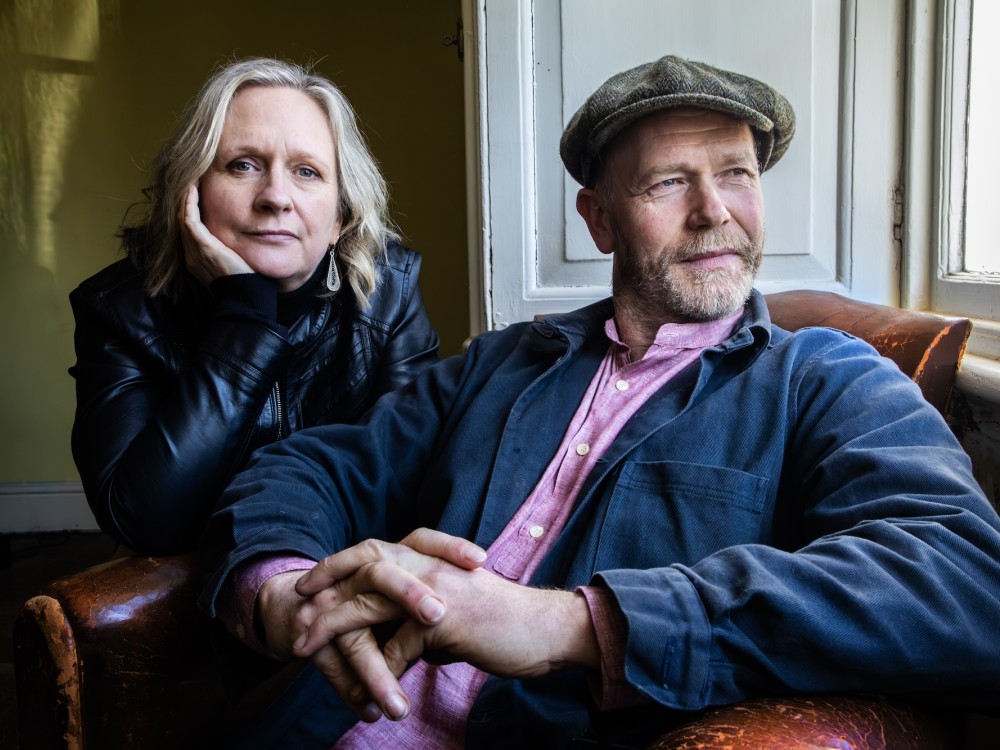
James now performs on the guitar alongside leading concert violinist Hannah Perowne. Both unusual instruments were carved from the same ancient oak, buried for around 5,000 years before being unearthed at Rosedene Farm near Methwold. Jet black in colour and streaked with blue-black medullary rays, the timber is extraordinarily rare and incredibly hard to work.
The maker of these instruments is Philip Taylor, who works from an old railway cottage surrounded by apple trees. “Philip is a true craftsman,” James says. “From our first meeting it was clear he’s a very special human being - someone who makes things because it matters to him, not because he’s chasing fame or fortune.”
James watched the guitar take shape, witnessing the moment the book-matched panels were joined and admiring the subtle intricacies of the luthiers’ art. “We were both nervous when it was finally finished,” he admits. “I didn’t want to have to tell him it was rubbish after all that work! He turned up with this beautiful instrument. There was a cleanness to the way he’d made it, a restrained simplicity; it was extraordinary. This Neolithic guitar was a world-class instrument with a captivating sound.”
Hannah was equally enchanted. She has played her professional violin for 25 years, an instrument made especially for her, but the bog oak fiddle cast its own spell. “I didn’t expect that quality of sound,” she says. “Oak isn’t typically used for serious violin making or master-grade instruments.”
What elevates these instruments beyond the exceptional is not only their sound but the story they carry. “You can’t ignore the fact that you’re holding wood that was there when the Sahara was forming,” Hannah says. “It comes from a time before what we think of as modern man. It has witnessed so much, and it feels as if there’s a mountain of story contained within it.”

When the two instruments were finally played together, neither musician anticipated the result. “It was as if they recognised one another,” James says. “They could sing together. It was a very visceral experience.” That moment sealed a collaboration now known as Blaec Ac, named after the Old English for black oak.
James has long sought unusual, intimate ways to bring music to life. His Songtellings weave together words, music and personal story, while his Wilderness Concerts take small audiences to desert islands and woodland meadows. Hannah’s path has been equally distinguished. Norfolk-born and Royal Academy-trained, she has led major European orchestras, including the Gewandhausorchester in Leipzig. She continues to perform in the more traditional classical music scene but was also in search of something more connected. “Concert halls are wonderful,” she says, “but this is about getting up close with people and exchanging something real.”
Their Blaec Ac events bring both instincts together. The programme draws on a Baroque and Romantic repertoire, with Bach, Vivaldi and Elgar threaded with James’ narrative storytelling, poetry and the unfolding tale of the oak itself. In these intimate settings, the fourth wall dissolves entirely. Afterwards, musicians and audience sit together to share a meal and a moment that will become a lifetime memory.
“One person wrote to say the evening was ‘pure alchemy’, which it is for me too,” Hannah recalls. “Another said ‘You tell your children there are certain experiences you remember for the rest of your lives, and this was one of them.’”
“These instruments, so rare and drawn from such ancient material, demand to be heard intimately,” James adds. “The oak is calling us back to a time when people told stories by firelight.”
To discover more about the black oak or commission an opportunity to hear these remarkable instruments, visit hannahperowne.com and jamesboyd.co.uk.
