
The hidden story of Cley
Between the sleepy lanes and coastal marshes of Cley-next-the-Sea lies the enthralling story of one of medieval England’s most powerful ports
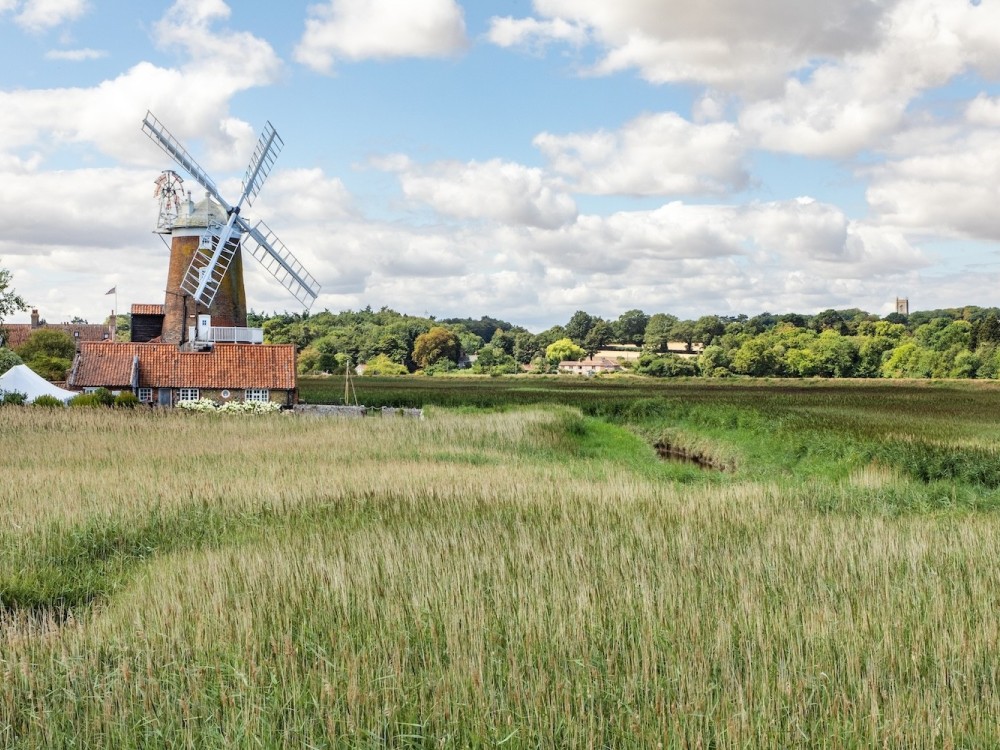
To the visitor strolling the coastal path today, Cley-next-the-Sea presents a picture of unhurried Norfolk charm. Flint-walled cottages line the High Street, the famous windmill rises above the reed beds and the marshes stretch serenely towards the shingle beach. Few realise that just a few centuries ago, this peaceful settlement was one of the busiest ports in England.
Travel back to the 13th century, and Cley would be almost unrecognisable. The narrow River Glaven was then a great tidal estuary, navigable by ocean-going vessels all the way to the church. Huge sailing ships brought fish, spices, oriental cloths and coal upriver to be distributed across England, while barley and malt were exported on the return journey.
“Cley formed part of Blakeney Haven — a grouping with Blakeney, Wiveton and Salthouse,” says local historian and parish councillor Richard Allen. “At its peak, it was one of the largest ports along this coast. North Norfolk was feeding and supplying the nation.”
Prosperity faded through a combination of forces: the gradual silting of the estuary, the embankment of the marshes in the 1630s, a devastating fire near the church in 1612 and finally the arrival of the railways at Holt in the 19th century, which severed what little trade remained. The harbour shifted from its original site near the church to its present position by the mill, and slowly the great port town became the tranquil village we see today.
The clues, however, remain for those who know where to look - and that was the inspiration behind the Cley Heritage Trail. Driven by parish council chair Victoria Holliday and developed over several years with the support of local volunteers including Richard, the trail was created to help residents and visitors understand the extraordinary depth of history hidden in plain sight.
“When you walk through the village, you don’t realise what it once was,” Richard explains. “You see a customs house and think, ‘why would a village this size have one of those?’” Funded in part by a grant from North Norfolk District Council’s Arts and Culture Fund, the trail was completed this year, with a display board on Newgate Green inviting walkers to look out across the marshes and imagine how the landscape appeared when ships still filled the valley.
The route takes around 45 minutes, winding through village lanes, along a stretch of the coastal path and down narrow lokes - the fascinating high‑walled passages that thread between old properties and add to the trail’s character. It’s a gentle and accessible walk suited to most visitors, with printed leaflets available in the church and an interactive map online

Along the way, a remarkable cast of buildings is revealed. St Margaret’s Church is perhaps the most striking stop. One of the finest of Norfolk’s 673 medieval churches, it’s far grander than its village setting suggests. Inside, the pillars of the south aisle display faint ship graffiti — mariners’ sketches of the very vessels that once traded at Cley’s quayside. The magnificent 14th-century south aisle window may never have been completed due to the Black Death, while the heraldic shields carved on the south porch reflect the extraordinary wealth of those who financed its construction.
Nearby, the Custom House, built around 1680, marks the height of Cley’s trading power. Sea-going vessels continued to moor at the quay until the 1870s, and today the Cley Harbour Group continues to maintain the channel. The old Town Hall, built in the 1890s, hints at a time when Cley carried civic status, while the Rocket House on the High Street served as headquarters for volunteers who rescued sailors from ships wrecked on the nearby shore. Perhaps the most poignant stop is the Station Master’s House, built in anticipation of a railway that never came, along with plans for 28 workers’ cottages that were never built.
For Richard, the trail is about more than historic curiosity. “Cley is a tranquil little village now, but there is far more than meets the eye when you start to walk around,” he says. “I hope people come away with a little insight into how important this place once was — not just to North Norfolk, but to England.”
For more information and to explore the interactive Cley Heritage Trail map, visit the Cley Parish Council website.