
Heritage and heartbeat in Downham Market
Celebrating the people, places and traditions that give this historic market town its character…
Downham Market has always been shaped by its landscape and its people: a place where history settles naturally into everyday life and community spirit feels as open as the wide Fenland skies above it. Its streets glow with the warmth of carstone, its market square hums with cheerful voices and its growing collection of independent businesses reflects a town proud of its past yet full of fresh energy.
Set on a rare rise above the surrounding Fens, Downham’s elevated ground offered early settlers both safety and visibility, helping it emerge as a recognised trading centre by Saxon times. In 1046, Edward the Confessor granted the town its market charter, securing its role as a thriving rural hub. For centuries it prospered through agricultural exchange: its butter market became renowned across the region, its river and rail links boosted productivity and the annual St Winnold’s Fair grew into one of the largest horse fairs in Europe. Thousands of animals were traded each year, drawing buyers from far beyond Norfolk and shaping the town’s identity — a tradition still honoured in commemorative events today.
History has left its mark in quieter ways too, woven into buildings and lingering along the lanes. One of the most famous tells of Charles I passing through in 1646 after the Battle of Naseby — donning a disguise, visiting a local barber and seeking refuge at a central inn while fleeing Parliamentary forces. Two centuries later came the drama of the Bread Riots of 1816, when rising food prices drove agricultural labourers to surround the Crown Hotel and trap Justices of the Peace inside. These moments of tension sit alongside the town’s gentler traditions, revealing a heritage much richer than its peaceful appearance suggests.
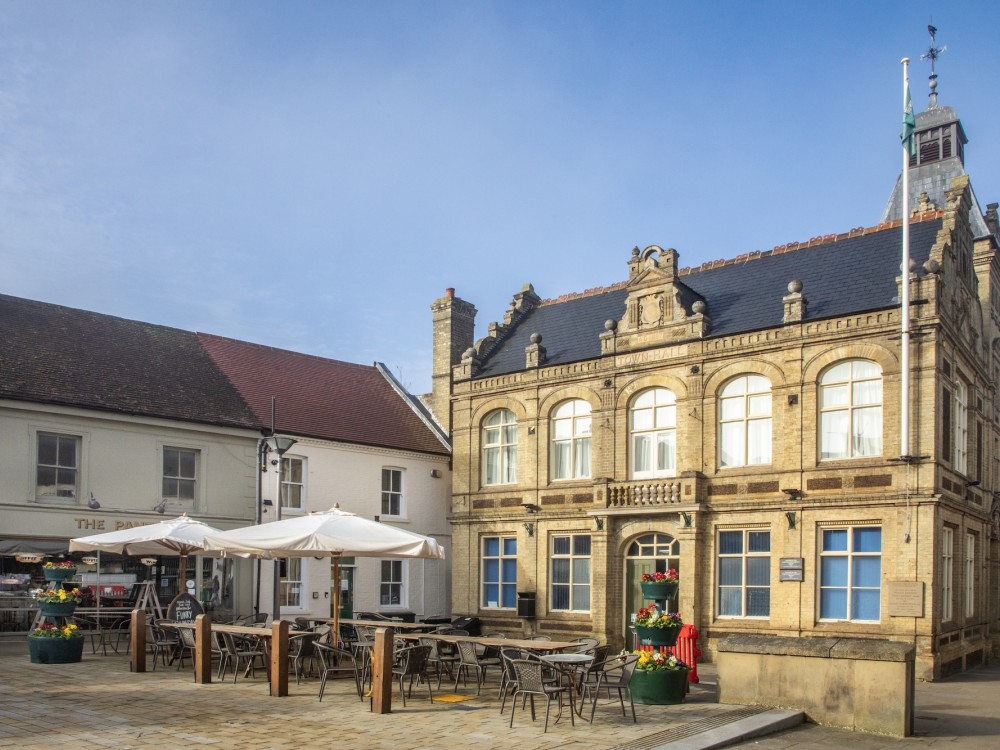
That heritage is written directly into the town’s fabric. Downham’s distinctive amber glow comes from its russet-toned carstone — the local material that earned it the affectionate nickname ‘The Gingerbread Town’. Its many striking buildings only deepen its sense of character, each holding stories of their own. St Edmund’s Church rises above the rooftops with timeless elegance, while the Town Hall, completed in the late 1880s, stands as a handsome expression of Victorian civic pride. Carstone cottages lend the streets their charm, and the gabled ‘gingerbread’ railway station remains one of the most attractive and best-preserved stops in East Anglia.

Yet no landmark captures the essence of Downham Market quite like its majestic black-and-white Clock Tower. Erected in 1878 as a gift from respected grocer and draper James Scott, it was intended as a lasting symbol of the town’s growing status. More than 500 schoolchildren attended its grand unveiling, each receiving a commemorative coin to mark the occasion. Its cast-iron body, Gothic details and illuminated faces were remarkably modern for a rural market town, and its bell was cast by the same foundry responsible for the original Big Ben bell. Today it remains Downham’s most recognisable emblem - a beloved centrepiece at the heart of the community.
“I see the clock as our beacon of light and life; it really is Downham,” says Jane Kaminski, who grew up in the town and eventually returned after moving away. “It has such a welcoming atmosphere all year round, and I feel very strongly that I’ve come home. The town has grown considerably since I left, of course, but where it matters it hasn’t changed at all. The people are just as friendly as ever before.”
Jane is one of the dedicated volunteers at Discover Downham Heritage Centre, a treasure trove of local stories, artefacts and archives housed in the old Fire Station. From organising social activities and supporting community groups to hosting exhibitions and events like Heritage Open Day, this vibrant hub connects all ages with the town’s past and present.

“Downham has the feel of a proper market town with a long history, yet it remains friendly and easy to live in,” adds Discover Downham Trustee Andy Laing. “There are many volunteers, clubs and groups committed to doing good work, and people are generally willing to help and participate when needed. It gives the town a warm and cooperative feel.”
That same sense of connection runs through Downham’s independent businesses, which have flourished in recent years to include restaurants, cafés, delis, craft shops, book shops, salons and more. For Lucy Peacock, co-owner of the award-winning Mabel the Bakery, the town’s personality is rooted in passion and belonging. “Downham Market has such a strong sense of community and pride,” she says. “It’s a town where people genuinely support local businesses and each other.”
Director Nick Brett of long-established family firm LawnBoy has witnessed that spirit across nearly six decades. “Having lived in Downham for most of my life and run my local business here for almost 57 years, I’ve seen the town change in many ways,” he says. “What hasn’t changed is its warmth. The great little independent businesses, the traditional market days and the familiar faces calling out a hello — that’s what makes this place special to me.”
That sentiment is shared by Nina Narramore of The Norfolk Cheese Company. “There’s a wonderful atmosphere here - not just among the brilliant businesses in town, but also our fantastic customers,” she says with a smile. “It’s a friendly place with a big heart and I feel genuinely honoured to be part of it.”
Downham Market’s lasting charm lies in this harmony of heritage and renewal; it’s a town where centuries-old stories sit comfortably beside new ideas, independent ventures and an inspiring community. The central market continues to prosper, maintaining traditions that stretch back hundreds of years while welcoming visitors each Friday and Saturday with an ever-growing variety of stalls. Its past gives it depth, its people give it warmth and its future is being shaped every day by those who care for it.
As Downham Market continues to evolve, this blend of history and modern life remains its greatest strength, ensuring the town’s next chapter will be every bit as characterful as the last.
