
The wondrous windhover of Norfolk
From hovering hunts to silent scans of the land below, witness kestrels in all their glory this season
As summer gives way to autumn and the first flecks of brown and gold appear, attention turns to the wild skies where the kestrel holds its place with effortless poise. It seems suspended in mid‑air, wings trembling as it fixes its gaze on the ground. Keen observers may also spot these striking birds lower down, scattered across freshly harvested fields and rough grasslands, as well as the Broads, marshes, fens and coastal dunes that make up Norfolk’s rich and varied landscape.
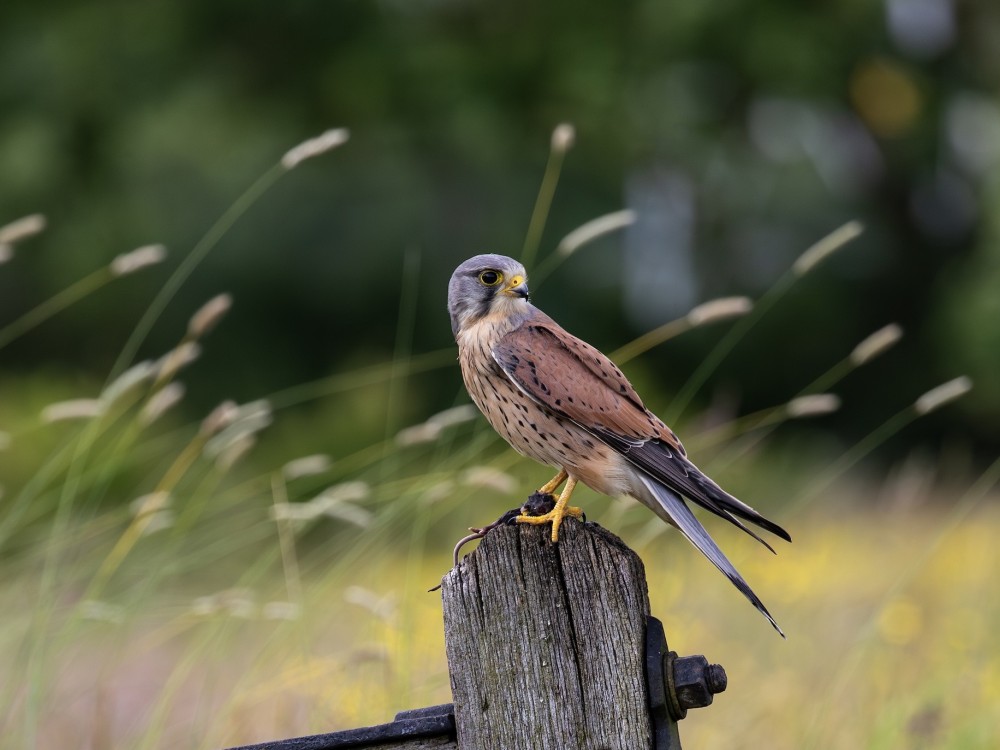
You might even catch sight of one perched atop a roadside telegraph pole. From these carefully chosen vantage points, kestrels use their exceptional eyesight to scan the landscape below, patiently searching for the slightest flicker of movement before swooping into action with breathtaking accuracy.
Kestrels are a joy to watch throughout the year, yet there is something particularly evocative about seeing them against the shifting backdrop of autumn. Their graceful flight and remarkable hunting abilities never fail to fascinate even the most seasoned wildlife enthusiasts.
“Every time I see a kestrel in the sky, I marvel at it,” says Bob Morgan, Conservation Officer at Norfolk Wildlife Trust. “Anyone who loves wildlife has seen the moving film Kes or read A Kestrel for a Knave cannot fail to love this wonderful bird of prey. A familiar presence across our countryside, towns and cities, they have been admired for centuries for their grace and their ability to hover.”

Intelligent, agile and highly skilled, kestrels spend much of autumn refining the techniques that will help them survive the challenging winter months. By now, the chicks that fledged earlier in the summer have left the nest, and both adults and juveniles can often be seen honing their hunting abilities.
For young birds, this is a crucial stage of development as they transition from dependent chicks into capable predators. Their plumage reflects this moment of growth, with buff‑edged feathers giving them a more mottled appearance than adults. Although they closely resemble females, they will acquire their full adult colouring by spring.
“After breeding, adult kestrels can travel some distance from their nesting ground, although this depends on small mammal populations,” Bob explains. “Generally, you will see them alone, as birds tend to lead a solitary life in autumn and winter.”
Even so, spotting two kestrels together is one of the season’s most rewarding sights. “A pair may use the same territory if it has proven successful in previous years,” Bob continues. “They’ll hunt voles, shrews, mice and young rats. Closer to larger towns and cities such as Norwich, house sparrows and young pigeons can form a significant part of their diet.”
The near‑total loss of urban sparrow populations in recent decades has contributed to a decline in kestrel numbers. As prey becomes scarcer, competition intensifies, making it increasingly difficult for these birds to find reliable hunting grounds.
“It doesn’t help that Norfolk has lost 98% of its wildflower‑rich meadows,” says Bob. “The ongoing management of field margins, rough grassland and traditional farmland is essential for the survival of our resident windhovers, because that’s where their food lives.”
Today, kestrels face a number of challenges. Avian flu, changing farming practices and secondary poisoning from prey that have ingested pesticides or rodenticides all threaten their future. Between 1995 and 2023, the UK breeding population declined by 37%, resulting in the species being added to the Amber List of Birds of Conservation Concern.
Fortunately, there are simple ways people can help. “Just letting your grass grow can make such a difference,” says Bob. “A well‑sited kestrel nest box is also really important. In our increasingly tidy countryside, undisturbed old buildings and mature trees suitable for nesting are becoming harder to find.”
To safeguard the future of kestrels, Norfolk Wildlife Trust works to protect and restore the habitats on which they depend. Through the management of nature reserves and the creation of wildlife‑rich landscapes, the organisation is helping to ensure these iconic birds continue to find the food, shelter and breeding sites they need to thrive.
If a kestrel catches your eye this autumn, take a moment to pause and watch. Whether hovering motionless above a field or swooping with astonishing precision, you’ll be witnessing one of the countryside’s most mesmerising wildlife spectacles.
Visit norfolkwildlifetrust.org.uk to learn more about Norfolk’s wildlife and discover how you can help protect it.