
A journey rediscovered
Honouring the revival of an atmospheric route as walkers once again follow the pilgrims’ path from King’s Lynn to Walsingham
Norfolk has always been a place that rewards those who take their time. Its beauty reveals itself in layers: long horizons, gently folding farmland, the sudden rise of a medieval tower above the trees. From riverside rambles and country strolls to tranquil woodland paths, the county offers countless ways to experience its landscapes at a walking pace. Among the most evocative is the King’s Lynn to Walsingham Way, a symbolic long-distance route with history at its heart. Launched earlier this summer, it has already inspired a sense of pride among those who helped bring it back to life, while delighting the first walkers setting out to trace its 29 miles from the Wash to one of England’s most renowned pilgrimage destinations.
That spirit of wonder and enthusiasm was unmistakable at the launch event at King’s Lynn Minster on Saturday 6th June, where speeches from passionate local supporters celebrated the trail’s heritage, its revival and its future. After the route was blessed, a group of around 35 people set off together on the first three miles, following Lynn’s storied streets out towards the green fringes of South Wootton.
The trail begins in the shadow of King’s Lynn Minster, a magnificent church founded in 1101 by the Bishop of Norwich and a place of welcome and prayer for nearly a thousand years. From here, walkers wind through the town’s historic quarter, passing the quiet refuge of All Saints’ Church before continuing to St Mary’s Roman Catholic Church on London Road — a landmark with a prominent place in the pilgrimage story since 1897.
The route then leads to the octagonal Red Mount Chapel, one of the county’s most distinctive religious landmarks. Built in 1485 as a stopping place for pilgrims journeying to Walsingham, it showcases intricate vaulting and curious carvings, and has served a remarkable variety of purposes over the centuries.

“It’s a journey that connects people not just with the landscape, but with centuries of history and faith,” says Canon Mark Dimond, a driving force behind the relaunch of the trail. “Each stage reveals something new, whether it’s a hidden corner of the town or a place that has welcomed travellers for generations.”
Beyond King’s Lynn, the route leads into some of West Norfolk’s delightful countryside communities. It passes through the Woottons and into the charming village of Castle Rising, where the vast earthworks of its 12th-century castle rise dramatically from their surroundings. From here, the path leads to the historic hamlet of Babingley before entering the Sandringham Estate, where the church of St Mary Magdalene stands serene among the trees. The trail continues through Anmer and into Great Bircham, a natural halfway point known for its traditional cottages, village store and inviting pub.
“It’s a relatively flat and easy route, suitable for all ages and ideal for walking in stages. Most people could comfortably complete it over two days, perhaps stopping at Great Bircham,” Canon Mark adds. “It’s not designed for road cyclists, as there are sections that are public bridleways, but that slower pace is part of its appeal. Moving gently through a landscape offers a very different experience from rushing through it as part of everyday travel.”

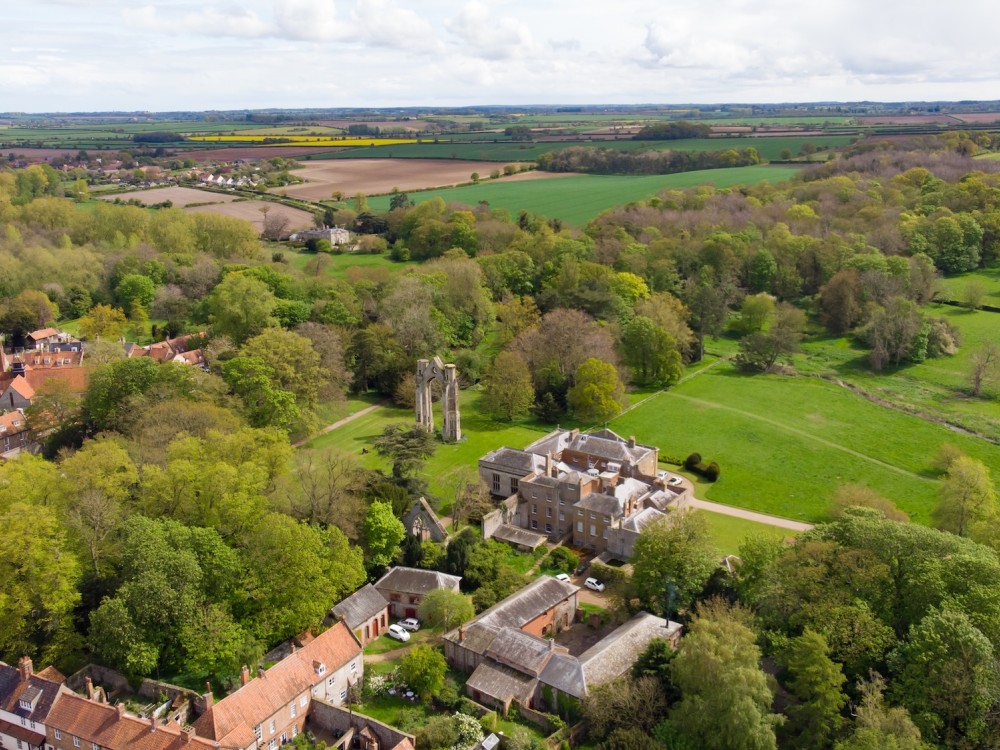
For many, this last section will be the most moving. The ‘Holy Mile’ into Little Walsingham has been walked by pilgrims for centuries, and modern travellers can still feel that history underfoot. The ruins of the medieval priory, alongside the friary, Orthodox chapel, Methodist church and Roman Catholic Shrine, speak to the layers of devotion that have shaped this small but astounding village.
“Over the past decade, there has been renewed interest in pilgrimage routes across Europe, and the King’s Lynn to Walsingham Way forms an important link within that wider network,” reflects local historian Dr Paul Richards, who also played a key role in relaunching the trail. “Celebrating local heritage, supporting village economies and encouraging tourism in Norfolk are all vital. We hope it will inspire people to explore this landscape and appreciate the stories it holds.”
His enthusiasm is echoed by Philip Eke, Senior Tourism Officer at the Borough Council, who believes the trail also speaks to a growing desire for slower, more mindful travel. “Many modern visitors are actively seeking calmer, less crowded and healthier travel experiences,” he says. “This trail is not only a reminder of King’s Lynn’s religious heritage and its historic links to Walsingham, but also an accessible way to explore local wildlife and unspoilt rural areas.”
What makes the King’s Lynn to Walsingham Way so special is not simply its history, scenery or spiritual resonance, but the way these elements come together. At a time when more people are rediscovering walking as a source of health, reflection and connection, the trail offers a journey that feels both deeply rooted and
newly relevant.
To find out more or start planning your own walk, visit explorewestnorfolk.co.uk/trails/kings-lynn-walsingham-way-54/
