
A legacy built beam by beam
As one of the nation’s most remarkable building projects heads to the big screen, we uncover the Norfolk-bound odyssey shaped by two women and a home that refused to be lost…
There are stories in Norfolk that feel stitched into the landscape, and then there are stories so extraordinary they seem almost impossible. The tale of May Savidge belongs firmly in the latter. More than half a century ago, when road developments threatened to erase her 15th century Hertfordshire home, the indignant 58‑year‑old made a decision that would astonish councillors, planners and neighbours and define the rest of her life. Instead of surrendering the house to demolition, she dismantled it piece by piece and moved it 100 miles from the market town of Ware to Wells‑next‑the‑Sea.
It was an act of defiance, devotion and sheer endurance that still inspires today. Now, with her remarkable mission set to reach cinema screens, the house she saved - and the woman who later completed her work - stand as a testament to a determination that refused to be flattened.
Born in Streatham in 1911, May Savidge grew up in circumstances that demanded resilience. She lost both parents young and her fiancé in her teens – experiences that Christine Adams, her niece through marriage, believes shaped her self‑reliance and resolve. She trained as a draughtswoman at de Havilland, becoming the only woman in the team working on the Mosquito aircraft during the war, and later converted an old Thames river barge into a floating home.
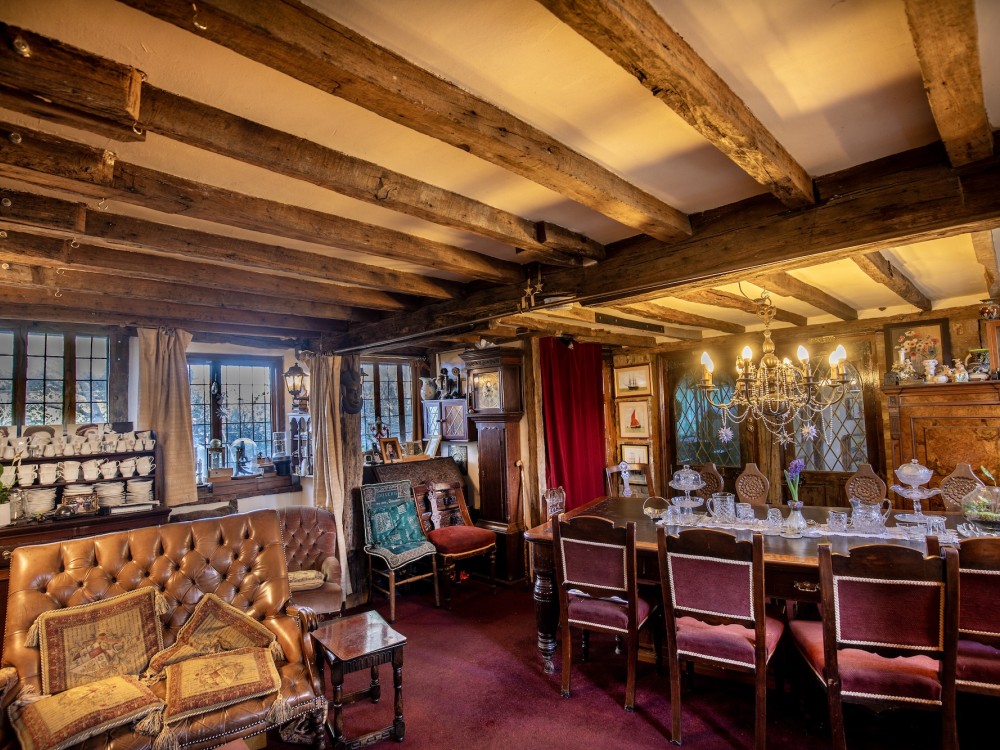
After battling persistent leaks, May set her sights on another restoration project in 1947 when she discovered a semi-derelict property in Ware. Designed as a traditional hall house, with private living quarters attached to an open hall, it immediately drew her in with its character. As she stripped back centuries of ‘improvements’, she uncovered grand Tudor fireplaces and beams marked by medieval carpenters - clues that the building was far older than she first imagined. Her affection for the house deepened with every discovery, so when the council announced it would be demolished to make way for a relief road, May dug in her heels and refused to accept its fate. Carefully numbering every beam, window and tile, she embarked on a monumental mission to relocate the property to one of her favourite coastal holiday settings.
“She resolved to save the house at all costs,” Christine recalls with a smile. “She even wrote to the RAF and the US Air Force to ask whether they had a helicopter that could lift the frame to ‘a little plot of land right by the village green’ she’d bought in Wells‑next‑the‑Sea. When they politely declined, she became even more determined. I remember her saying, ‘It’s only a kit of parts. I’m an engineer, I can do this.’ It took her a whole year to dismantle the house, and she wouldn’t allow me or my husband to help.”
The demolition was painstakingly methodical. May set an alarm clock each morning to meet her daily targets and continued living in the house until the removal of the outside walls forced her into a workshop in the garden. She supervised the loading of a Bedford lorry, which made the 200‑mile round trip to Norfolk 11 times to transport the frame, the fittings and her vast collection of belongings.

By the time the main structure was raised in Wells, May was living in a caravan on the site, pushing wheelbarrows through mud and climbing scaffolding well into her seventies. She laid bricks with the precision of a master mason, intent on getting every detail right. For 23 years she pressed on, through storms, failing health and long, solitary nights, accompanied only by her loyal dog Sasha.
When May passed away in 1993, just short of her 82nd birthday, the house was still unfinished. There were no upstairs walls. Polythene flapped in the windows. The garden had grown as high as the first floor. Inside, rooms were stacked to the ceiling with papers, diaries, magazines, cases and boxes – it was a fragile shell filled with a lifetime’s accumulated junk.
With the property left to their children, who had many happy memories of visiting eccentric ‘Auntie May’, Christine and her husband Tony found themselves facing the monumental task of completing her mission. “Work had to start right away as the building was in quite a state; it wasn’t even watertight,” Christine remembers. “We bit the bullet and stuck at it, grabbing sleeping bags, extra jumpers, hot water bottles and tools, and heading up to Wells in our Land Rover every weekend.”
The deeper they delved into the crooked, clutter‑filled house, the larger the project became – and it affected them in different ways. Christine felt a growing responsibility to honour May’s vision, choosing to retire early from teaching and move up to Wells to focus on the restoration. For Tony, the work became an increasingly irksome burden, one that eventually drew him into a separate life elsewhere with another partner.
Rather than lose momentum, Christine only grew more determined. The house became both a refuge and a challenge as she navigated the end of her 40‑year marriage. She sorted, catalogued and sold May’s hoarded treasures to fund the restoration, tackling the garden, brickwork and unfinished rooms. She plastered, cleared, rebuilt and repaired, often working late into the night. As she sifted through more than 440 diaries and countless letters, she gained a deeper insight into May’s passion and personality and later shared her story in a book when approached by a London publisher.
“I’ve always said my anger restored the house, but there was more to it than that,” Christine shares. “There was loyalty, affection, and a growing understanding of the woman whose life had been poured into every beam. I made a promise on her deathbed that I’d finish the project she began, and I wanted to create a living space for my children to cherish forever.”
There came a moment when Christine realised the project had become hers as much as May’s. Yet she always felt her aunt’s presence - sometimes guiding, sometimes gently disapproving. She imagines her tutting at the leadwork, questioning every modern compromise, but she also believes May would be proud. Today, Ware Hall House stands complete: warm, lived in and deeply loved. A home shaped by two women across two generations, each driven by a determination that refused to let it die.

Interest in May’s extraordinary mission has never faded. It’s been featured on Antiques Roadshow, resurfaced in newspapers and captivated heritage enthusiasts who marvel at her commitment. Now, a film company has bought the rights to Christine’s book, bringing the story to a wider audience. Christine believes her characterful Auntie May would have been delighted by the attention - though she imagines she’d have had plenty to say about how the house is recreated on screen.
“I owe a lot to Auntie May. Her building project gave me a sense of purpose when I desperately needed one, and retracing the steps of her life rekindled mine,” Christine reflects. “Her very last words to me were ‘I’m sorry’ as she realised the burden she was passing on - but she shouldn’t have been sorry. My final words to her are ‘thank you.’”
With May’s tale now finding new life beyond the page, Christine hopes others will feel equally empowered when they see the film. It’s a story that shows how one person can make a difference, that preserving history matters, and that determination — real determination — can move mountains. Or houses.
Ware Hall House now stands quietly in the Norfolk light, its beams raised
for the second time in five centuries. It’s a testament to a woman who refused to surrender her home, and to another who refused to let her legacy fade. A house saved from demolition, a life’s work carried across counties and a story that continues to inspire long after the last brick was laid.


May meticulously labelled every beam and single‑handedly removed hundreds of Hertfordshire peg tiles from the roof, taking care to preserve the property and piece it back together with absolute precision (above).