
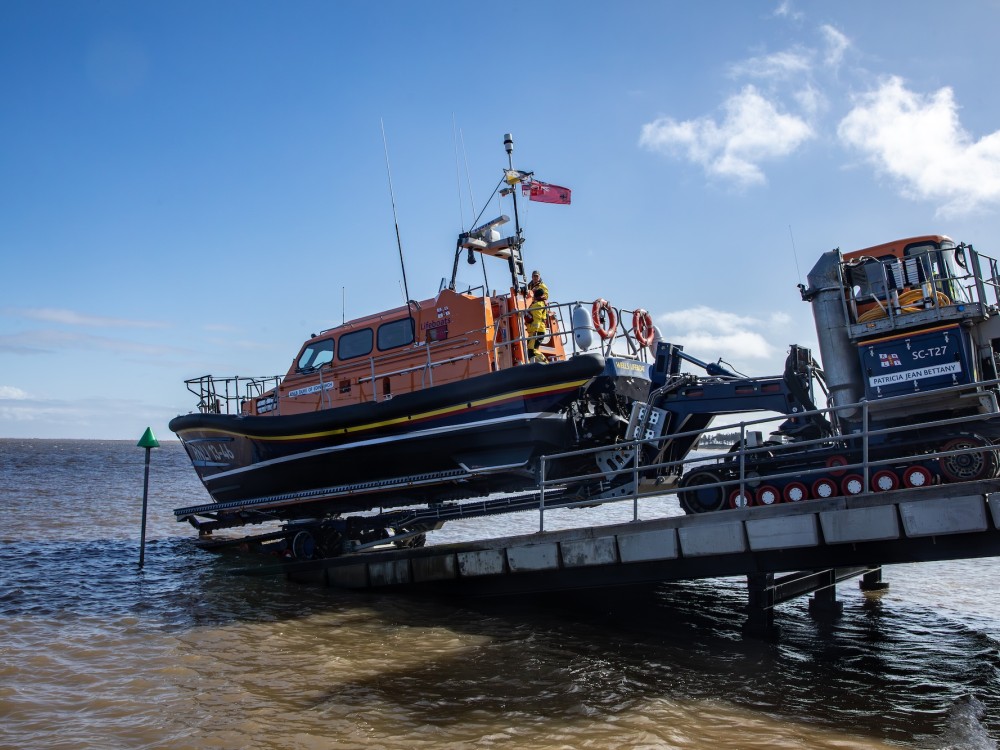
Launching to save lives
Where wide skies meet rising tides, the RNLI Wells-next-the-Sea crew is ready to respond when calm turns to crisis
The North Norfolk coast can feel vast and timeless, a landscape shaped by wide skies, shifting sands and the slow rhythm of the tide. At Wells-next-the-Sea, that sense of calm can change in an instant. A pager sounds. Doors open. Engines roar into life. Within minutes, a volunteer crew is racing across sand and shingle towards danger, answering a call that could mean the difference between life and death.
That sudden shift defines Wells RNLI, a station rooted not only in its dramatic setting but in generations of dedication. A lifeboat has served this harbour for more than 150 years, and that legacy continues through a team of local volunteers who stand ready to respond at any hour and in any weather.
“We can be sitting at home and suddenly we’re running for the door. We often get down to the station, into our kit and launch out to sea in just seven minutes,” says crew member and Water Safety Officer Mandy Humphreys. “It’s incredibly fast and we physically can’t do it any quicker, but for someone in trouble, those seven minutes can feel like a lifetime.”
Mandy joined the Wells crew in 2018, shortly before moving to the town. Having retired early, she was searching for something meaningful to pour her energy into. The RNLI had been part of her life since childhood, as her mother spent more than 50 years volunteering at a local lifeboat station and fundraising for the charity. Yet even with that family connection, Mandy never imagined she would one day be part of a rescue crew herself.
“I had no maritime background at all and feared I wouldn’t be strong enough to pass the tests,” she says. “My gran always said that being scared and doing it anyway is the definition of courage. I just went for it, built my skills from scratch and learnt from the local team. It’s something I never imagined I could do, but I’m so glad I put myself forward. I’m honestly living my dream.”


She embraced the role with determination, developing the knowledge needed to operate in one of the most complex and fast-changing coastal environments in the country. Today she serves on both lifeboats at Wells - the fast and agile inshore boat, Peter Wilcox, and the larger Shannon class all-weather lifeboat, Duke of Edinburgh. She has built skills in leadership and navigation while also playing a vital role in water safety education, helping people stay safe long before a rescue is ever needed.
Life on the crew is defined by unpredictability. There are no set shifts and no fixed routines, only the knowledge that everything can change in a heartbeat. When the pager sounds, the team knows only which boat is needed. The details of the emergency often come later or not at all until they reach the casualty.
“It’s incredibly reactive,” Mandy says. “My first thought is always concern because someone is in real trouble, but the moment we’re on the boat the whole crew is focused. Our lives are in each other’s hands. There’s a real sense of togetherness.”
The inshore lifeboat is often the one to respond, a small but powerful vessel built for speed in shallow water. Along this coastline, it’s frequently called into action to rescue people caught out by tidal cut off, one of the most common and deceptive dangers the RNLI faces.
“About five out of six people we rescue are cut off by the tide,” Mandy explains. “It moves very quickly here, and many people don’t realise they’re on a sandbank or out on a remote stretch of beach until the water is already rising around them.”
For incidents further out to sea or involving larger vessels, the all-weather lifeboat comes into its own, a highly capable craft designed to operate in the most challenging conditions. Both boats are kept ready at all times, refuelled and prepared to launch again after every shout, training session or exercise.
Yet what stays with the crew is not just the mechanics of a launch, but the human experience behind each call.

Mandy’s memories range from the disorientating darkness of her first shout on a November evening, when the crew launched to save a group stranded on marshland, to a recent Easter Sunday call-out to five teenagers cut off by the tide
at Blakeney.
“I was about to tuck into an Easter egg when the pager went,” she recalls. “It was dark and windy, and the sea still had energy from the storms in the days before. We were being bounced around in the inshore boat and had to wade out to reach them. They were scared, of course they were, but we got them safely ashore.”
Alongside her operational duties, Mandy dedicates a significant amount of time to water safety, a vital and often unseen aspect of the RNLI’s work. Engaging with schools, local organisations and businesses, she helps people understand the risks
they may not realise they are taking. Her work ranges from providing tidal cut off maps to building relationships with beach wardens and car park attendants, encouraging them to pass on safety advice.
“Education is a simple but powerful tool. If we can help people understand the dangers, we can stop them getting into trouble in the first place,” she says. “Some of the best lifeguards never actually get wet; they spend time talking to people. It’s important that local people feel proud of keeping their communities and visitors safe.”
That pride runs through the entire operation. While dramatic launches may capture attention, the RNLI depends on a much wider network, from shore crew and fundraisers to shop volunteers and supporters, all contributing to a service that relies entirely on donations and goodwill.
For Mandy, that shared effort is what makes it so meaningful.
“My favourite thing about volunteering for Wells RNLI is being part of something bigger than me,” she says. “From heading out in difficult conditions to helping people stay safe before they ever need us, it all feels incredibly worthwhile.”
Visit wellslifeboat.org to learn more about the station’s history, access key water safety guidance and discover ways you can support the local team selflessly saving lives at sea.

Mandy’s water safety tips:
Head back to dry land at least four hours before high tide. Around Wells-next-the-Sea, the tide moves fast, and people can find themselves cut off far more quickly than they expect.
Check local advice and beach maps. Speak to people who know the area and look out for signage to avoid accidentally straying onto sandbanks.
If you become stranded, stay calm and stay put. Don’t try to wade to safety. Currents can be strong, and the water can deepen suddenly.
Call 999 and ask for the Coastguard. They will coordinate the response and send a lifeboat if needed.
Use the what3words app to pinpoint your exact location. A precise three-word reference helps the crew find you far faster than a general beach or town name.
